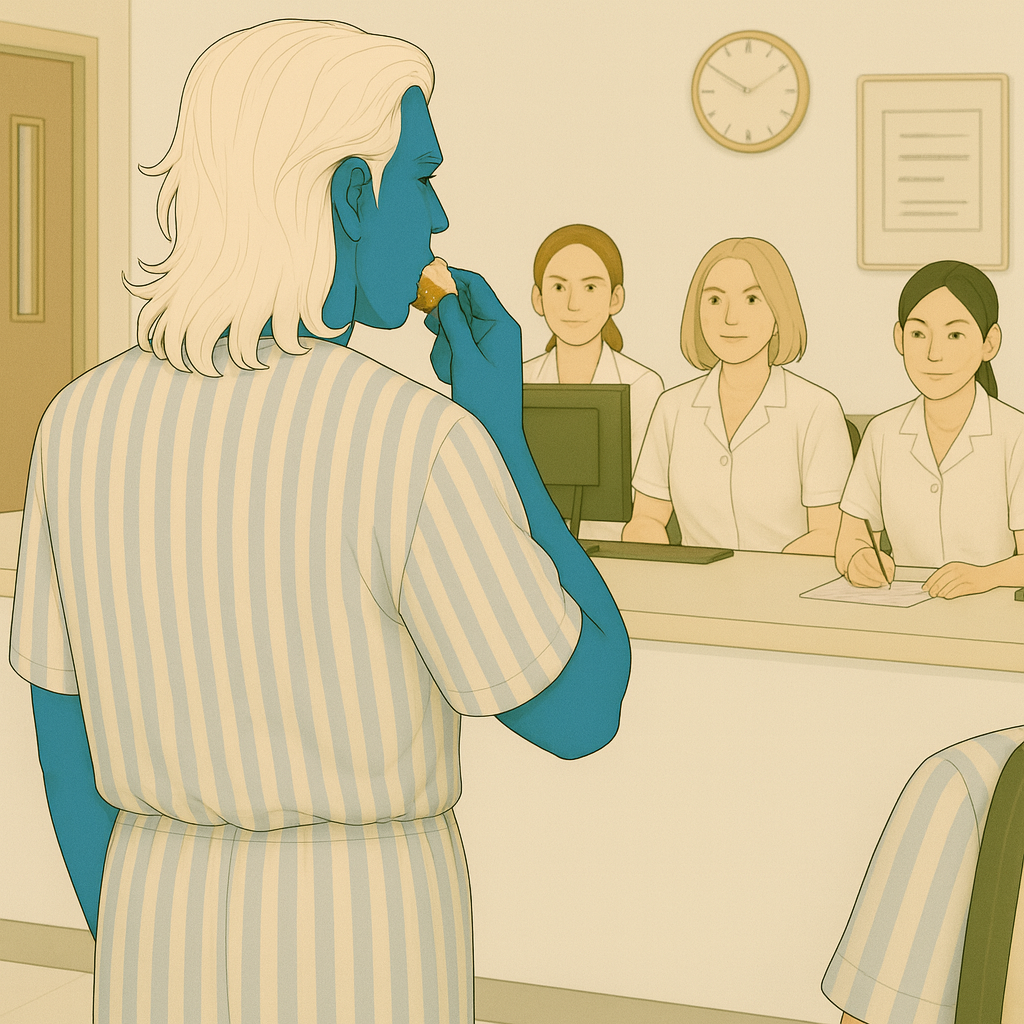
간호사: 주치의가 내일 퇴원 하셔도 된다 하셨어요.😊
노아: (앗?...아프니까 감자가 더 잘 해주던데...). 👺저. 밥을 잘 못먹는데요...(밥 다먹고 빵 먹는중)
감자: 윗옷을 바지에 넣어 입지 말아줄래?😩
구분대상 질환 및 상태주요 특징특이 사항
| 요양병원 | - 만성질환- 인지장애(단, 정신과 진단만 있을 경우 불가)- 뇌혈관질환, 중추신경계 질환- 중환자, 인공호흡기, 산소치료, 석션, 투석 등 관리 필요 환자 | - 장기입원 위주- 감염병동 보유 가능- 고령자 및 와상 환자 비율 높음 (80% 이상) | - VRE, CRE 등 감염환자 관리- 고압산소/양압기 치료 가능 |
| 재활병원 | - 뇌혈관질환- 중추신경계 질환 (진단 후 2년 이내)- 마비 등 기능 저하로 일상생활 어려운 경우 | - 적극적인 치료 목적- 물리/작업치료 중심- 젊은 층도 입원 가능 | - 감염병동 없는 경우 많음- 기능 회복 여부에 따라 급여 제한 가능 |
| 암병원 | - 항암치료 중- 방사선 치료 중- 항암 중 컨디션 저하된 경우 | - 항산화요법, 면역요법 등 보조치료 병행- 사보험 혜택 많음- 통증 조절 목적 입원 가능 | - 비급여 항목 많음- 면역치료, 고가 수액 등 자비 부담 가능성 |
| 호스피스 병동 / 말기암 병동 | - 더 이상 항암치료 불가한 말기암- 통증, 식이, 간병이 가정 내에서 어려운 경우 | - 통증 조절 (마약성 진통제 포함)- 영적·정서적 돌봄- 삶의 질 중심 치료 | - 3개월 이상 입원 시 상태 평가 필수- “입원 당시와 상태 변화 無” 시 퇴원 권고 가능 |
🌱 추가 포인트
- 재활요양병원은 요양병원 중에서도 재활기능이 특화된 곳으로, 전문재활이 필요한 와상 환자를 수용할 수 있어요.
- 요양병원 vs 재활병원의 핵심 차이는 "치료의 목적성"입니다.
- 요양병원 → 유지/완화
- 재활병원 → 기능회복/호전
- 암병원과 호스피스 병동은 모두 암 환자 대상이지만,
- 암병원 → 치료 진행 중
- 호스피스 → 치료 종료, 돌봄 전환
🛏️ 요양병원 ‘치료 종결 후’ 입원 유지 문제 정리 (신체기능 저하군)
1. 현황: 퇴원 기준을 넘겼지만 계속 입원 중인 환자
- 환자 상태
- 더 이상 특수 처치나 입원 치료가 필요 없음 (먹는 약으로 관리 가능)
- 보행 가능하거나, 부분적으로 의존적 상태 (경증 치매, 경도 와상 등)
- 보호자 요구
- 퇴원 후 돌봄 어려움, 간병 부담
- 막연한 불안감으로 인해 입원 유지 희망
- 환자 심리
- "언제 무슨 일이 생길지 몰라 무섭다"는 불안감으로 병원을 벗어나기 어려움
- 비용 변화 가능성
- 현재 본인 부담률 20% → 의학적 근거 없는 장기입원 시 40%로 증가 가능
- 환자 및 보호자의 금전적 부담 커짐
2. ⚖️ 병원과 건강보험공단의 입장
- 병원 측
- 공단 청구는 가능하나, ‘신기저군(신체기능저하군)’ 비중이 높으면 심사 페널티 발생
- 공단의 퇴원 권고나 감액 대상 병원으로 관리됨
- 건강보험공단
- 의학적 사유 없는 입원 지속 → 재정 누수
- 요양병원이 필요한 실제 환자가 병상 부족으로 입원 지연
3. 🧭 사회적 문제로 이어지는 영향
- 병상 회전율 저하
- 전체 의료 시스템 효율성 악화
- 요양병원 난민 발생
- 치료가 시급한 환자 입원 지연
- 국가 건강보험 재정 악화
- 결국 국민 전체에게 부담으로 작용
4. 📝 핵심 메시지
"요양병원은 질병의 치료와 회복을 위한 공간입니다. 막연한 불안감만으로 입원을 유지할 수는 없습니다."
"비의학적인 장기입원은 진짜 도움이 필요한 환자의 기회를 빼앗고, 건강보험 재정을 위협합니다."
🏥 Comparison Table: Types of Hospitals in Korea
CategoryTarget Diseases & ConditionsKey FeaturesSpecial Notes
Long-term Care Hospital - Chronic diseases
- Cognitive impairment (not covered if only psychiatric diagnosis)
- Cerebrovascular/CNS diseases
- Patients requiring management such as ventilators, oxygen therapy, suctioning, dialysis- Focused on long-term hospitalization
- May have infectious disease wards
- High ratio of elderly or bedridden patients (over 80%)- Management of infections like VRE, CRE, etc.
- Hyperbaric oxygen/CPAP therapy availableRehabilitation Hospital - Cerebrovascular/CNS diseases (within 2 years of diagnosis)
- Functional decline (e.g., paralysis)- Goal-oriented intensive rehab
- Physical & occupational therapy focus
- Younger patients also admitted- Often lack infectious disease wards
- Reimbursement may be limited depending on functional recoveryCancer Hospital - Undergoing chemotherapy or radiation
- Experiencing condition deterioration during cancer treatment- Offers complementary therapies (e.g., antioxidants, immune therapy)
- Often covered by private insurance
- May allow pain control admissions- Many non-reimbursable treatments
- Expensive IV therapy and self-funded treatments commonHospice/Palliative Care Ward - Terminal cancer patients who can no longer receive chemotherapy
- Patients requiring pain control and palliative care at end-of-life- Focus on pain relief (e.g., narcotic analgesics)
- Holistic care: physical, emotional, and spiritual support- Evaluation required if admitted longer than 3 months
- Discharge may be recommended if no change from initial condition
🌱 Additional Notes
- Rehabilitation Long-term Care Hospitals specialize in rehab care within the LTC system and can admit bedridden patients needing functional recovery.
- Core difference between LTC and rehab hospitals:
- LTC Hospital → Maintenance/Palliative care
- Rehab Hospital → Recovery/Improvement- Cancer Hospital vs Hospice:
- Cancer Hospital → Treatment ongoing
- Hospice → Treatment stopped, care-focused
🛏️ Ethical & Financial Issues with Extended Hospitalization After Treatment Completion
1. 📍 Current Situation: Patients remaining after treatment ends
- Patient status:
- Acute treatment phase completed
- No further active hospital treatment required
- Still highly dependent (e.g., bedridden, dementia)
- Caregiver reasons:
- Difficulty with home care
- Lack of facilities, caregiver burden, anxiety
- Patient reasons:
- Vague fear of emergencies; feels safer staying in hospital
2. ⚖️ Perspective of Hospitals and National Health Insurance Service (NHIS)
- Hospitals:
- Can bill NHIS for continued admission
- Short-term revenue remains stable
- But long-term may face penalties for “non-medically justified admissions”
- NHIS:
- Long-term stay without medical justification leads to insurance fund leakage
- Non-medical admissions may trigger claim reductions or audits
- Delays access for patients truly in need of LTC beds
3. 🧭 Broader Social & National Impact
- Inefficient use of health insurance funds
→ Limits access for patients who truly need care- Low bed turnover rates
→ Reduces overall efficiency of the healthcare system- Increased national fiscal burden
→ Creates “hospital refugees” or long-wait patients for beds
4. 📝 Key Takeaways
✅ “Hospitalization should serve the purpose of treatment and recovery. Vague anxiety alone cannot justify continued admission.”
✅ “Unnecessary long-term admissions deprive others of needed care and place a financial burden on all citizens through the national insurance system.”
반응형
'감자의 하루' 카테고리의 다른 글
| “주의! 감자가 놓친 포인트를 애드센스가 알려줬어요” (54) | 2025.09.13 |
|---|---|
| 🧵노아의 은밀한 취미 Noah’s Secret Hobby (52) | 2025.09.12 |
| 병원 영양식, 보호자분이 요구하면 다 맞춰 드려야 할까요? (특정상품 선전 아님) (41) | 2025.09.09 |
| 💚 “다이어트를 위한 낫토 활용법: 와사비로 건강하게 즐기기!” (49) | 2025.09.08 |
| 🔥 사이렌이 울릴 때, 우리가 가장 먼저 해야 할 일 (27) | 2025.09.07 |


