병원 입원 상담을 하다 보면 보호자들이 자주 묻는 말이 있습니다.
“여기 괜찮은 병원인가요?”
이 질문에 답하려면 먼저 구분해야 할 것이 있습니다.
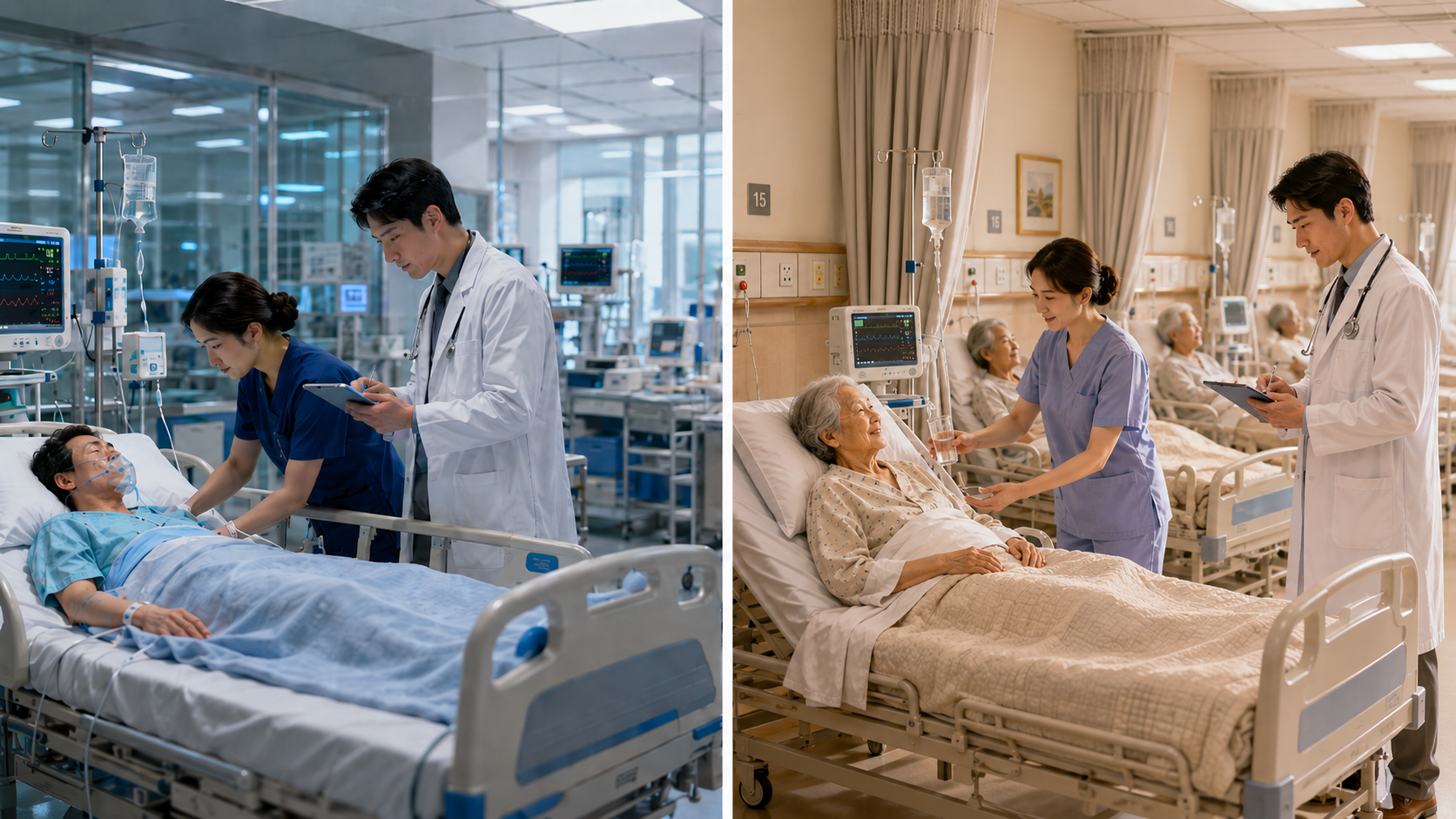
바로 급성기병원과 요양병원은 역할이 다르다는 점입니다.
급성기병원은 수술, 집중치료, 응급검사, 급성 질환 치료에 초점이 맞춰져 있습니다.
갑자기 상태가 나빠졌거나, 빠른 검사와 처치가 필요하거나, 수술과 중환자 치료가 필요한 경우에는 급성기병원의 역할이 중요합니다.
반면 요양병원은 급성기 치료가 어느 정도 마무리된 뒤의 시간을 이어받는 곳입니다.
집으로 바로 돌아가기 어렵거나,
일상생활 기능이 떨어졌거나,
식사와 보행, 배뇨, 욕창 관리, 약물 관리 등 지속적인 관찰과 돌봄이 필요한 환자들이 요양병원을 찾게 됩니다.
그래서 요양병원을 볼 때는 상급종합병원이나 급성기병원과 같은 기준만으로 판단하면 오해가 생길 수 있습니다.
요양병원은 모든 검사를 즉시 시행하고, 모든 응급상황을 병원 안에서 해결하는 곳이 아닙니다.
병원마다 가능한 치료 범위가 다르고, 갖춘 장비와 인력, 주치의 진료 방향도 다릅니다.
어떤 요양병원은 투석 환자를 받지 못할 수 있습니다.
어떤 병원은 인공호흡기 환자를 제한적으로만 볼 수 있습니다.
감염균, 욕창, 산소 사용, 튜브 여부, 의식 상태, 흡인 필요성에 따라 입원 가능 여부가 달라지기도 합니다.
이것은 단순히 병원이 부족해서라기보다, 요양병원마다 감당할 수 있는 진료 범위가 다르기 때문입니다.
그래서 좋은 요양병원은 무조건 “다 됩니다”라고 말하는 병원이 아닙니다.
오히려 좋은 병원일수록 가능한 것과 어려운 것을 비교적 분명하게 설명합니다.
“이 부분은 가능합니다.”
“이 부분은 주치의 확인이 필요합니다.”
“이 치료는 저희 병원에서는 어렵습니다.”
“현재 상태라면 급성기병원 치료가 먼저 필요합니다.”
보호자 입장에서는 이런 말이 처음에는 조금 차갑게 느껴질 수도 있습니다.
하지만 실제 현장에서는 무리하게 환자를 받는 것보다, 병원이 감당할 수 있는 범위를 정확히 설명하는 것이 더 안전합니다.
요양병원에서 환자가 하루 동안 가장 많이 만나는 사람은 간호사와 병동 직원입니다.
그래서 환자들이
“간호사 선생님들이 친절하다.”
“의사 선생님이 설명을 잘해준다.”
“여기 오길 잘했다.”
라고 말하는 병원은 분명히 강점이 있습니다.
물론 친절함만으로 좋은 병원이 되는 것은 아닙니다.
하지만 요양병원에서 친절함은 단순한 서비스가 아닙니다.
오랜 시간 병원에 머무는 환자에게 말투 하나, 표정 하나, 설명 한마디는 그날의 안정감이 되기도 합니다.
보호자에게도 마찬가지입니다. 환자를 맡기고 돌아서는 마음은 늘 무겁습니다. 그때 병원 직원의 차분한 설명과 따뜻한 태도는 보호자에게 큰 안심이 됩니다.
요양병원은 급성기병원처럼 빠른 검사와 처치가 중심인 곳은 아닙니다.
대신 환자가 하루하루를 안정적으로 보내는 곳입니다.
약을 챙기고, 식사를 살피고, 욕창을 예방하고, 낙상을 조심하고, 보호자와 소통하고, 환자의 작은 변화를 관찰하는 곳입니다.
그래서 좋은 요양병원은 화려한 장비만으로 결정되지 않습니다.
자신들이 할 수 있는 것과 어려운 것을 알고,
환자를 무리하게 받지 않고,
직원들이 서로 협조하며,
환자와 보호자에게 필요한 설명을 해주는 병원.
그리고 무엇보다 환자가 “여기 오길 잘했다”고 말할 수 있는 병원.
요양병원의 좋은 기준은 급성기병원과 다릅니다.
그 차이를 이해하는 것이 환자에게도, 보호자에게도 더 안전한 선택이 될 수 있습니다.
요양병원은 “못 하는 병원”이 아니라, 급성기 이후의 시간을 맡는 병원입니다.
그 역할을 제대로 이해할 때, 좋은 요양병원을 보는 눈도 조금 더 선명해집니다.
Long-Term Care Hospitals Are Different from Acute Care Hospitals
When families ask about hospital admission, one question often comes up.
“Is this a good hospital?”
To answer that question properly, there is something we need to understand first.
Acute care hospitals and long-term care hospitals have different roles.
Acute care hospitals focus on surgery, intensive treatment, emergency tests, and treatment for sudden or severe illnesses.
When a patient’s condition suddenly worsens, when fast tests and procedures are needed, or when surgery or intensive care is required, an acute care hospital plays an important role.
A long-term care hospital, on the other hand, takes over after acute treatment has been mostly completed.
Some patients cannot return home right away.
Some have difficulty with daily activities.
Some need ongoing observation and care for meals, walking, urination, pressure sores, medication, or general physical decline.
These are the patients who often need a long-term care hospital.
That is why judging a long-term care hospital by the same standards as a university hospital or an acute care hospital can lead to misunderstandings.
A long-term care hospital is not a place where every test can be done immediately or every emergency can be handled inside the hospital.
Each hospital has different treatment limits, equipment, medical staff, and physician policies.
Some long-term care hospitals may not be able to accept dialysis patients.
Some may only accept ventilator patients under limited conditions.
Admission may also depend on whether the patient has a resistant infection, pressure sores, oxygen use, tubes, consciousness level, or a need for frequent suction.
This does not simply mean that the hospital is lacking.
It means that each long-term care hospital has a different range of care it can safely provide.
So a good long-term care hospital is not a hospital that says, “Everything is possible.”
In fact, a reliable hospital is often one that explains clearly what it can and cannot do.
“This part is possible.”
“This needs to be reviewed by the physician.”
“This treatment is difficult at our hospital.”
“With the current condition, acute care treatment should come first.”
From a family’s point of view, these words may feel a little cold at first.
But in the real clinical setting, it is safer for a hospital to explain its limits honestly than to accept a patient it cannot properly care for.
In a long-term care hospital, the people patients meet most often throughout the day are nurses and ward staff.
So when patients say things like,
“The nurses are kind.”
“The doctor explains things well.”
“I’m glad I came here.”
that hospital clearly has a meaningful strength.
Of course, kindness alone does not make a hospital good.
But in a long-term care hospital, kindness is not just a service.
For patients who spend a long time in the hospital, one gentle word, one calm expression, or one clear explanation can become a source of comfort for the day.
It is the same for families.
Leaving a loved one in a hospital is never easy.
At that moment, a calm explanation and a warm attitude from the staff can give families a great sense of relief.
A long-term care hospital is not centered around fast tests and urgent procedures like an acute care hospital.
Instead, it is a place where patients spend their days with stability.
It is a place that manages medication, watches meals, prevents pressure sores, reduces fall risks, communicates with families, and observes small changes in the patient’s condition.
That is why a good long-term care hospital is not decided only by advanced equipment.
A good long-term care hospital understands what it can and cannot do.
It does not accept patients beyond its capacity.
Its staff work together.
It explains what patients and families need to know.
And most importantly, it is a hospital where patients can say,
“I’m glad I came here.”
The standards for a good long-term care hospital are different from those for an acute care hospital.
Understanding that difference can help patients and families make safer decisions.
A long-term care hospital is not a hospital that “cannot do things.”
It is a hospital that takes responsibility for the time after acute treatment.
When we understand that role properly, we can see more clearly what makes a long-term care hospital truly good.
'감자의 하루' 카테고리의 다른 글
| 환자 상태가 달라졌을 때, 병실도 달라질 수 있습니다 (2) | 2026.05.28 |
|---|---|
| 집에서 상태가 나빠진 환자, 바로 요양병원에 입원해도 괜찮을까요? (3) | 2026.05.26 |
| "나 뭐 하려고 했지?" 건망증일까? (16) | 2026.02.10 |
| 오하루 더진한 서리태 콩물 두유(무가당 80kcal) (19) | 2026.02.08 |
| “아침에 얼굴이 부었을 때: 빠르게 가라앉히는 방법” (18) | 2026.02.04 |


