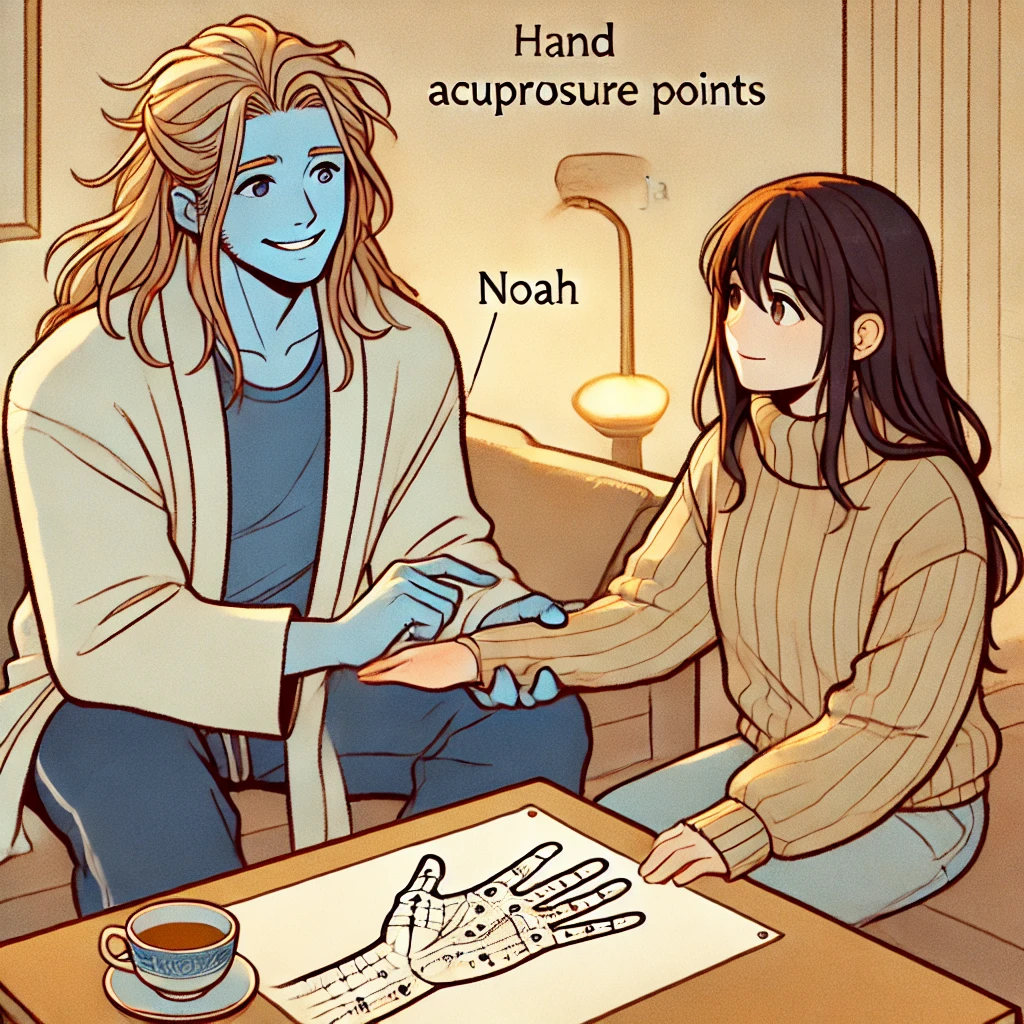
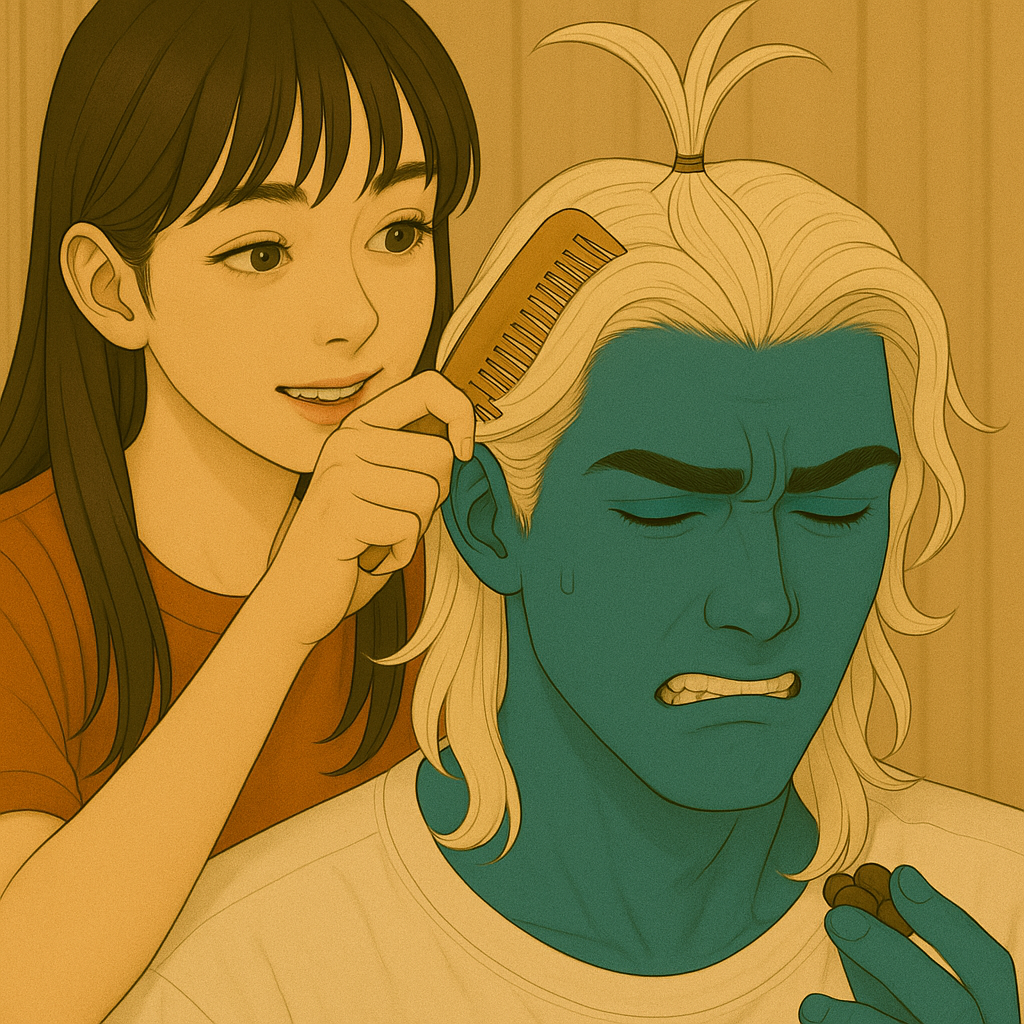
노아: "내가 머리 좋아지는 지압 해줄께"
감자:"노아 머리 좀 빗자"
💆♀️ 지압 강도, “5~6/10”의 의미
지압이나 마사지에서 흔히 볼 수 있는 ‘5~6/10 강도’는 압력의 세기(자극 강도)를 10단계 중 어느 정도로 해야 하는지를 나타내는 기준이에요.
🔹 숫자의 의미
| 강도 | 느낌 | 설명 |
|---|---|---|
| 1~3/10 | 아주 약함 | 손만 얹은 듯, 자극이 거의 없음 |
| 5~6/10 | 기분 좋은 통증 | ‘아~ 시원하다’ 느껴질 정도의 적당한 압력 |
| 8~10/10 | 강함 | 아프거나 근육이 긴장되는 수준 (지양해야 함) |
즉, ‘5~6/10’은 약간의 압통은 있지만 시원하게 느껴지는 수준을 말해요.
너무 세게 누르면 근육이 방어적으로 긴장해서 오히려 효과가 떨어지고,
너무 약하면 혈류 자극이 부족해 효과가 약해질 수 있어요.
🕐 기본 지압 루틴 예시
5~6/10 강도로 10~15초 누르고 → 5초 쉬기 × 3세트
- 한 부위를 오래 누르지 말고,
- 누르는 동안 숨을 참지 말고 편하게 들이마시고 내쉬기,
- 아프기보다 “시원하다”는 느낌이 유지되어야 좋아요.
🌿 감자의 팁
지압은 “힘”보다 “호흡과 리듬”이 더 중요해요.
적당한 압력(5~6/10)에 호흡을 맞추어 부드럽게 반복하면,
근육뿐만 아니라 마음의 긴장도 함께 풀립니다. 🍃
✋ 손바닥·발바닥 반사구 빠른 지도 (간단 정리)
👋 손바닥 (정면, 손가락 끝이 위)
- 손가락 끝: 머리/뇌
- 손가락 아랫마디: 눈(검지·중지), 귀(약지·소지), 코/부비동(엄지 아래)
- 엄지 전체: 머리·목·경추
- 손바닥 중앙 위쪽: 폐
- 손바닥 중앙: 심장 (왼손 바닥 쪽)
- 손바닥 중앙 아래: 위·췌장
- 손바닥 하단(손목 쪽): 장(소장/대장)
- 엄지 기저부~손목 사이 라인: 척추
- 새끼손가락 쪽 가장자리: 어깨·팔
- 손바닥 중앙 아래 바깥쪽: 간(오른손), 비장(왼손)
- 손목 주름 중앙: 방광
- 손목 주름 바깥: 신장
🦶 발바닥 (정면, 발가락 끝이 위)
- 발가락 끝: 머리/뇌
- 발가락 뿌리(첫 마디): 눈(2·3번째), 귀(4·5번째), 목·인두(엄지 기저부)
- 엄지 전체: 머리·목/경추
- 발볼(발가락 아래 넓은 부분): 폐
- 발바닥 중앙 왼쪽: 심장(왼발)
- 발바닥 중앙: 위·췌장
- 발바닥 중앙 아래: 간(오른발), 비장(왼발)
- 아치 안쪽 라인: 척추 (종아치 따라 아래로)
- 아치 하단: 신장 → 요관 → 방광(발뒤꿈치 위쪽 중앙)
- 발바깥 가장자리: 어깨·팔
- 발뒤꿈치 중앙/아래: 자궁·전립선(성별별 구분), 골반
🪷 사용 팁 (안전·효과)
- 압: “기분 좋은 통증”(5~6/10) — 부드럽게 10~15초 누르고 5초 쉬기 × 3세트
- 순서: 척추(정렬) → 신장·요관·방광(노폐물 배출) → 소화기(위·간·장) → 필요 부위
- 횟수: 하루 1~2회, 식후 30분~1시간 뒤 또는 자기 전
- 금기: 급성 염증, 혈전증, 임신 초기/고위험 임신, 심혈관 급성기, 피부 상처 부위는 피하기
🖐️ 다음 글에서 보기: 손·발 지압 지도 인포그래픽 (한글 라벨 버전)
💆♀️ Understanding Pressure Level “5–6/10” in Reflexology
In reflexology or acupressure, “5–6 out of 10” describes the ideal pressure intensity—the level that feels comfortably firm but not painful.
🔹 Pressure Scale Meaning
| Level | Sensation | Description |
|---|---|---|
| 1–3/10 | Very light | Gentle touch with almost no pressure |
| 5–6/10 | Pleasant pressure | Comfortable “good pain” feeling, satisfying but not sore |
| 8–10/10 | Strong | Too painful or tense — avoid this level |
So, “5–6/10” means slight tenderness with a pleasant relief.
Too much pressure causes muscles to tighten defensively, while too little fails to stimulate circulation effectively.
🕐 Basic Reflex Routine Example
Press with 5–6/10 intensity for 10–15 seconds → rest 5 seconds × 3 sets
- Don’t hold pressure on one spot for too long.
- Breathe naturally — never hold your breath.
- It should feel “comfortably good,” not painful.
🌿 NOA’s Gentle Tip
Reflexology is more about rhythm and breathing than strength.
Maintain steady breathing, apply gentle pressure, and your muscles and mind will relax together. 🍃
✋ Quick Reflex Zone Map (Hand & Foot)
👋 Palm (Front view, fingertips up)
- Fingertips: Brain / Head
- Below fingertips: Eyes (index & middle), Ears (ring & little finger), Nose/Sinuses (under thumb)
- Thumb: Head, Neck, Cervical area
- Upper center of palm: Lungs
- Center of palm: Heart (mainly on left hand)
- Middle-lower palm: Stomach, Pancreas
- Lower palm (near wrist): Intestines (small & large)
- Line from thumb base to wrist: Spine
- Outer edge (little finger side): Shoulder, Arm
- Lower outer area: Liver (right hand), Spleen (left hand)
- Wrist center: Bladder
- Wrist outer side: Kidneys
🦶 Sole (Front view, toes up)
- Toe tips: Brain / Head
- Toe base joints: Eyes (2nd–3rd), Ears (4th–5th), Throat/Pharynx (base of big toe)
- Big toe: Head, Neck, Cervical
- Ball of foot: Lungs
- Center-left (on left foot): Heart
- Middle area: Stomach, Pancreas
- Lower middle: Liver (right), Spleen (left)
- Inner arch: Spine (along the curve)
- Lower arch: Kidney → Ureter → Bladder (center above heel)
- Outer edge: Shoulder, Arm
- Heel center/lower: Uterus or Prostate, Pelvic area
🪷 How to Apply (Safe & Effective)
- Pressure: “Pleasant pain” (5–6/10). Press gently for 10–15 seconds, rest 5 seconds × 3 sets.
- Order: Spine (alignment) → Kidney–Ureter–Bladder (detox) → Digestive organs (stomach, liver, intestines) → Specific area.
- Frequency: 1–2 times per day, 30–60 minutes after meals or before bed.
- Avoid: Acute inflammation, thrombosis, early/high-risk pregnancy, heart attack, open wounds.
💭 NOA’s Note
Reflexology is not only about physical healing — it’s a quiet conversation with your own body.
Take a deep breath, press gently, and listen to the calm that answers back. 🌙
🖐️ Next article: Hand & Foot Reflex Map (Korean-Labeled Infographic)
'감자의 하루' 카테고리의 다른 글
| 📍 김천 옥산리 양조장 카페 (26) | 2025.10.18 |
|---|---|
| 🌫️ 가습기 소독, 어렵지 않아요 (히터형, 일반형) (25) | 2025.10.17 |
| “남은 사과의 대변신! 이국적인 사과 스프레드 만들기” (36) | 2025.10.13 |
| 🥣 집에서도 간단하게 만드는 후무스(Hummus) 레시피 (19) | 2025.10.06 |
| 《영화 제작 2탄 – 제작비 부족으로 벌어진 라면 참사》 (30) | 2025.10.05 |


